
Razors & Shaving Tools: A Complete Guide to Smooth, Safe, and Smart Grooming
Shaving feels simple until it goes wrong. Razor bumps, cuts, irritation, or uneven results usually come down to one thing: using the wrong razors and shaving tools. According to dermatology surveys in the U.S., nearly 70% of people experience shaving irritation at least once a month, mostly due to poor tool choice or technique. The good news is this is avoidable.
This guide breaks down everything you need to know about razors and shaving tools. You will learn how they work, which options suit your skin type, and how to shave safely without damaging your skin.
Understanding Razors: More Than Just a Blade
A razor is not just a sharp edge. It is a grooming tool designed to remove hair while protecting your skin barrier. The quality, design, and blade system all matter.
Modern razors fall into different categories, each serving a specific purpose. Choosing the right one depends on your skin sensitivity, hair thickness, and shaving frequency.
If you are also working on improving overall skin health, this connects closely with proper skin prep routines, which we cover in our skin care basics guide.
Types of Razors and How They Differ
Disposable Razors
Disposable razors are affordable and convenient. They work well for occasional shaving or travel.
Pros
- Easy to use
- No maintenance
- Widely available
Cons
- Dull quickly
- Higher risk of irritation
- Not environmentally friendly
These razors suit people who shave infrequently or need a quick solution.
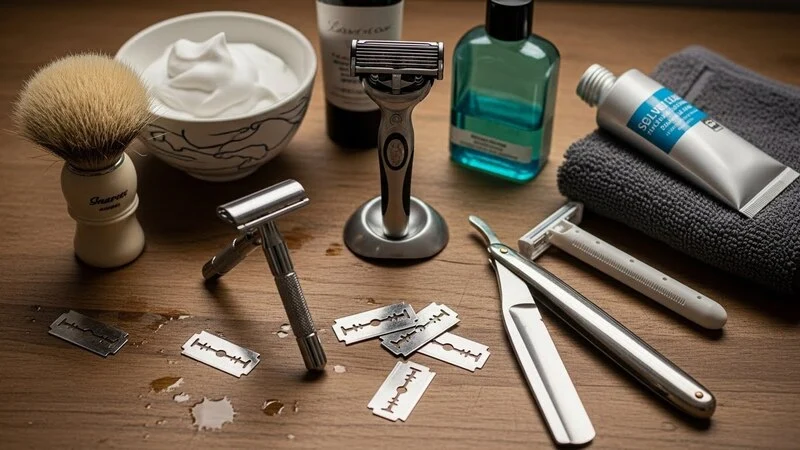
Cartridge Razors
Cartridge razors feature replaceable blade heads and ergonomic handles. They dominate the U.S. grooming market.
Why they are popular
- Multiple blades offer closer shaves
- Pivoting heads reduce cuts
- Designed for speed and comfort
However, more blades do not always mean better results. For sensitive skin, multiple blades can increase friction. Dermatologists often recommend fewer blades for irritation-prone skin.
Safety Razors
Safety razors use a single double-edged blade. They require more technique but offer excellent control.
Best for
- Sensitive skin
- Ingrown hair prevention
- Precision shaving
They reduce repeated blade passes, which helps minimize razor bumps. Many professionals prefer safety razors for long-term skin health.
Electric Razors
Electric razors trim hair instead of cutting it flush with the skin. This makes them gentler.
Ideal for
- Daily shaving
- Busy routines
- Sensitive or acne-prone skin
Electric razors pair well with post-shave skin recovery routines, which you can explore in our men’s grooming guide.
Shaving Tools That Improve Results
Razors work best when paired with the right shaving tools. Skipping these often leads to poor outcomes.
Shaving Brushes
A shaving brush lifts hair and evenly distributes shaving cream. It also gently exfoliates dead skin.
Benefits
- Improves lather quality
- Reduces clogged blades
- Enhances shave closeness
Natural or synthetic brushes both work well. Synthetic brushes dry faster and suit sensitive skin.
Shaving Creams, Gels, and Soaps
Lubrication matters. Dry shaving increases friction and skin damage.
Quick comparison
- Creams offer moisture and cushion
- Gels provide visibility for precision
- Soaps deliver traditional, rich lather
Choose formulas with aloe vera, glycerin, or ceramides. Avoid heavy fragrance if you have reactive skin.
Aftershave and Skin Soothers
Aftershave is not just about scent. It restores the skin barrier.
Look for:
- Alcohol-free formulas
- Ingredients like witch hazel or niacinamide
- Cooling and anti-inflammatory properties
This step aligns closely with post-shave skin repair, a topic also discussed in our razor burn prevention article.
How to Choose the Right Razor for Your Skin Type
Not all skin reacts the same way.
Sensitive Skin
- Use single-blade or electric razors
- Avoid aggressive multi-blade systems
- Prioritize lubrication
Thick or Coarse Hair
- Safety razors or high-quality cartridge razors work best
- Sharp blades matter more than blade count
Normal Skin
- Most razor types will work
- Focus on consistency and blade hygiene
Choosing correctly reduces irritation by up to 40%, according to grooming industry data.
Common Shaving Mistakes to Avoid
Many problems come from habits, not tools.
Avoid these mistakes
- Pressing too hard
- Using dull blades
- Shaving against the grain immediately
- Skipping skin prep
A sharp blade with light pressure always wins. Let the razor do the work.
Maintaining Razors and Shaving Tools
Clean tools last longer and protect your skin.
Basic care tips
- Rinse blades after every use
- Dry tools to prevent bacteria growth
- Replace blades regularly
- Store in a dry environment
Poor hygiene increases the risk of breakouts and infections, especially around the beard and neck area.
Final Thoughts: Smarter Tools, Better Shaves
Razors and shaving tools directly impact your skin’s health. A good shave should feel smooth, not painful. When you match the right razor with proper tools and technique, shaving becomes simple and effective.
Focus on skin-friendly choices. Invest in quality tools. Treat shaving as skincare, not just grooming. The results will show every time you look in the mirror.
Olly
Olly is a fashion and style content creator behind OllyFashionStyle.com — covering everything from trending outfits and nail art to shoes, accessories, and seasonal style guides. Every post is built on real research, written to help you make confident style decisions without the fluff.