Men’s Watches: A Complete Guide to Style, Function, and Smart Buying Choices
Men’s watches are more than timekeeping tools. They are statements of style, symbols of precision, and reflections of personality. In the United States, over one in three men wears a watch daily, not just to tell time, but to express confidence and professionalism. Yet many buyers feel overwhelmed. Quartz or automatic? Dress or sports? Luxury or everyday? This guide breaks down everything you need to know about men’s watches in a clear, practical, and expert-driven way, helping you choose a watch that truly fits your lifestyle.
Why Men’s Watches Still Matter in the Smartphone Era
Smartphones may show the time, but they cannot replace the presence of a well-chosen watch. A quality watch adds credibility. It completes an outfit. It signals attention to detail.
According to market data, the U.S. watch market exceeds $10 billion annually, driven by strong demand for men’s wristwatches. Professionals, collectors, and everyday users still value watches for reliability, craftsmanship, and style.
In short, a watch does what a phone cannot. It stays visible, intentional, and timeless.
Types of Men’s Watches Explained
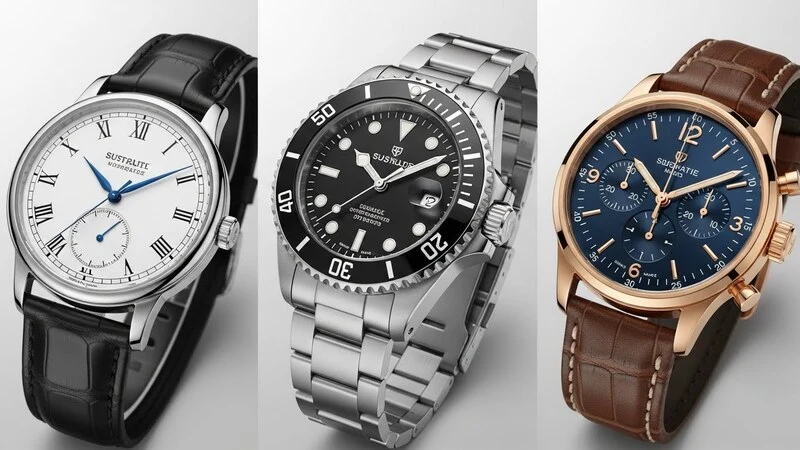
Understanding watch types is essential before buying. Each category serves a different purpose.
Dress Watches
Dress watches focus on simplicity and elegance. They feature slim cases, minimal dials, and leather straps. These watches pair best with suits, formal wear, and office attire.
Sports Watches
Sports watches emphasize durability. They often include water resistance, shock protection, and luminous hands. Many men prefer them for daily wear due to their rugged build.
Dive Watches
Dive watches handle water pressure and harsh conditions. They usually offer 200 meters or more water resistance and rotating bezels. Even non-divers choose them for their bold look.
Smartwatches
Smartwatches combine technology with convenience. Fitness tracking, notifications, and health monitoring drive their popularity, especially among younger U.S. buyers.
Watch Movements: Quartz vs Automatic vs Mechanical
The movement defines how a watch functions. Choosing the right one affects accuracy, maintenance, and price.
| Movement Type | Power Source | Accuracy | Maintenance | Best For |
|---|---|---|---|---|
| Quartz | Battery | Very high | Low | Everyday use |
| Automatic | Wrist motion | High | Moderate | Watch enthusiasts |
| Mechanical | Hand-wound | Moderate | High | Collectors |
Quartz watches dominate the U.S. market because they are affordable and precise. However, automatic watches attract buyers who value craftsmanship and heritage.
Key Features to Look for in Men’s Watches
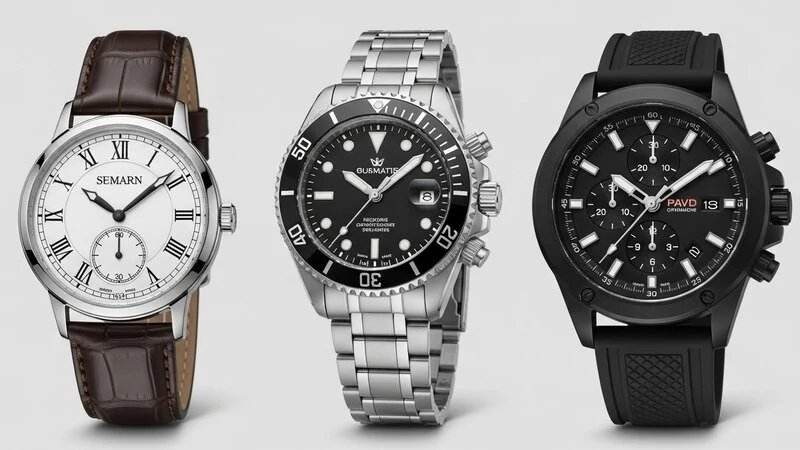
A good watch balances design and function. Before purchasing, evaluate these core features.
Case Size and Fit
Most men’s watches range from 38mm to 44mm. Larger wrists suit bigger cases. Smaller wrists need balanced proportions.
Materials
- Stainless steel offers durability and versatility.
- Titanium feels lighter and resists corrosion.
- Leather straps provide comfort and elegance.
- Metal bracelets add strength and longevity.
Water Resistance
Always check water resistance ratings. A 50-meter rating handles splashes. A 100-meter rating supports swimming. Dive watches exceed this level.
Complications
Complications include extra functions like chronographs, date windows, moon phases, and GMT features. Choose only what you will use.
Men’s Watch Styles and Personal Identity
Your watch speaks before you do. That is why style alignment matters.
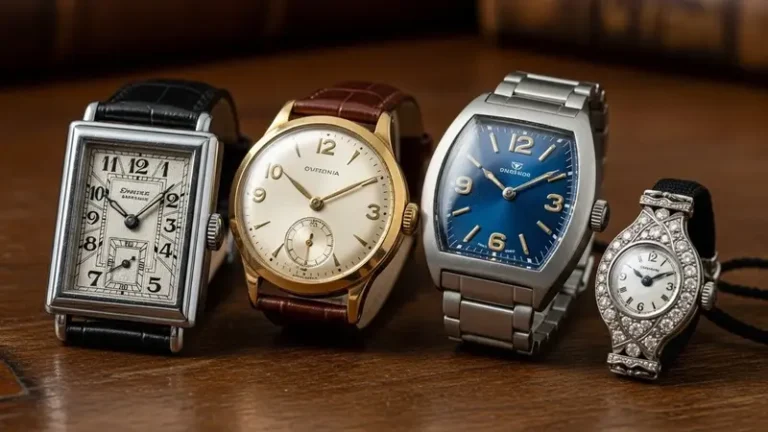
A minimalist watch fits professionals who prefer subtle elegance. A bold chronograph suits men who enjoy statement pieces. Vintage-inspired watches attract buyers who value nostalgia and heritage.
In the U.S., versatility drives buying decisions. Men often choose watches that transition easily from work to casual settings.
How to Choose the Right Men’s Watch for Your Lifestyle
Avoid trends that do not fit your routine. Instead, match your watch to daily needs.
- Office professionals should prioritize slim dress watches.
- Active individuals benefit from sports or hybrid smartwatches.
- Travelers need GMT or world-time features.
- Collectors often prefer mechanical or limited-edition models.
Budget also plays a key role. Fortunately, the market offers excellent men’s watches at every price point.
Price Ranges and What to Expect
| Price Range | What You Get |
|---|---|
| Under $200 | Reliable quartz, basic design |
| $200–$500 | Better materials, brand reputation |
| $500–$2,000 | Automatic movements, premium finish |
| $2,000+ | Luxury craftsmanship, heritage brands |
Higher prices usually reflect better movements, finishing, and brand value, not just looks.
Caring for Your Watch Properly
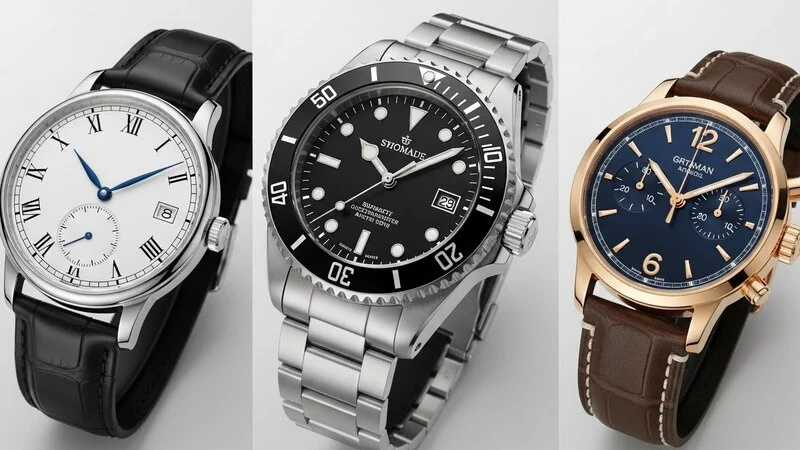
Proper care extends the life of your watch.
Clean it regularly with a soft cloth. Avoid extreme temperatures. Service mechanical watches every three to five years. Store watches properly when not in use.
These simple habits protect your investment and preserve performance.
Expert Opinion: Why Quality Beats Quantity
Owning one well-made watch often brings more satisfaction than owning several low-quality pieces. Quality watches age well. They hold value. Some even appreciate over time.
Experts agree that buying fewer but better watches leads to long-term satisfaction. Focus on craftsmanship, reliability, and timeless design rather than short-lived trends.
Final Thoughts on Men’s Watches
Men’s watches remain powerful style tools and practical accessories. They combine form, function, and personal expression in a way few items can. By understanding watch types, movements, features, and fit, you make smarter buying decisions.
Choose a watch that works for your life. Let it reflect who you are. When selected wisely, a men’s watch becomes more than an accessory. It becomes part of your identity.
Olly
Olly is a fashion and style content creator behind OllyFashionStyle.com — covering everything from trending outfits and nail art to shoes, accessories, and seasonal style guides. Every post is built on real research, written to help you make confident style decisions without the fluff.