Bridesmaid Dresses: How to Choose Styles Everyone Will Love
Choosing bridesmaid dresses sounds simple at first. Then reality hits. Different body types, skin tones, budgets, and personal styles all come into play. In the U.S., nearly 7 out of 10 brides say bridesmaid outfits are one of the most stressful planning decisions. That stress is understandable. These dresses appear in every wedding photo and directly affect how comfortable and confident your bridal party feels.
This guide breaks down everything you need to know about bridesmaid dresses in a clear, practical way. You will learn how to choose flattering styles, trending colors, and fabrics that work for real people—not just Pinterest boards.
Why Bridesmaid Dresses Matter More Than You Think
Bridesmaid dresses do more than match a wedding color palette. They shape the visual balance of your ceremony and reception. When chosen well, they elevate the bride’s look without stealing attention.
More importantly, they affect how your bridesmaids feel. Uncomfortable dresses lead to awkward photos and unhappy memories. Comfortable, well-fitted dresses create confidence, natural smiles, and relaxed body language.
From a styling perspective, bridesmaid dresses also act as a bridge between the bride, the décor, and the overall wedding theme. This is why dress selection deserves thoughtful planning.
Popular Bridesmaid Dress Styles That Work for Most Body Types
Not every trend works in real life. The most successful bridesmaid dresses share one thing: flexibility.
A-Line Dresses
A-line silhouettes remain the safest and most flattering option. They define the waist and flow gently over hips. This style works well for petite, curvy, and tall bridesmaids alike.
Wrap Dresses
Wrap dresses offer adjustability. Bridesmaids can tighten or loosen the fit, which makes them ideal for mixed body shapes. They also work beautifully for outdoor and summer weddings.
Empire Waist Dresses
Empire waist styles draw attention upward and create a lengthening effect. They suit bridesmaids who prefer a relaxed fit without sacrificing elegance.
You can explore more wedding fashion guidance in our related post on wedding outfit coordination, where dress balance plays a key role.
Trending Bridesmaid Dress Colors in the USA
Color trends change every year, but some shades continue to dominate because they photograph well and flatter most skin tones.
Soft Neutrals
- Champagne
- Taupe
- Warm beige
These tones work across seasons and blend easily with different wedding themes.
Earthy Tones
- Sage green
- Terracotta
- Dusty olive
Earthy shades remain popular for rustic, boho, and outdoor weddings.
Classic Deep Shades
- Navy blue
- Burgundy
- Emerald green
These colors feel formal, timeless, and perfect for evening ceremonies.
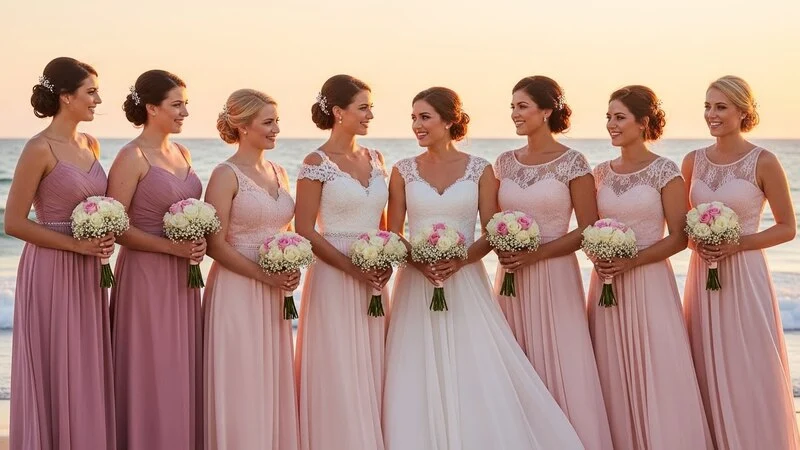
Choosing a color that complements your bridal hair and makeup creates a cohesive visual flow, especially in group photos. If needed, you can reference our detailed guide on bridal beauty planning.
Mix-and-Match Bridesmaid Dresses: A Smart Approach
Uniform dresses are no longer the only option. Mix-and-match bridesmaid dresses allow individuality while maintaining harmony.
Here is how to do it right:
- Choose one color family and allow different shades
- Keep the fabric consistent for visual unity
- Allow varied necklines for comfort and confidence
- Maintain the same length for clean photos
This approach works especially well for larger bridal parties. It also reduces stress and increases overall satisfaction.
Best Fabrics for Bridesmaid Dresses
Fabric choice affects comfort, movement, and appearance. Weather and venue should guide this decision.
Chiffon
Lightweight and breathable. Ideal for summer weddings and outdoor ceremonies.
Satin
Smooth and structured. Best for formal evening weddings. Requires proper tailoring.
Crepe
Soft with slight stretch. Works well for modern, minimalist styles.
Velvet
Perfect for fall and winter weddings. Adds richness and depth to photos.
Avoid heavy fabrics for warm climates. Heat discomfort shows clearly in facial expressions and posture.
Bridesmaid Dress Lengths: What Works Best
Dress length impacts both comfort and formality.
- Floor-length dresses suit formal and evening weddings
- Midi dresses feel modern and practical
- Knee-length dresses work well for casual or daytime ceremonies
If your wedding involves walking on grass, sand, or uneven surfaces, shorter lengths reduce stress and prevent wardrobe issues.
How to Keep Bridesmaid Dresses Budget-Friendly
Budget concerns often create tension. Clear communication solves most issues.
Here are practical ways to control costs:
- Set a price range early
- Allow bridesmaids to choose within that range
- Avoid last-minute custom alterations
- Choose re-wearable designs
According to U.S. wedding surveys, bridesmaid dresses priced between $100–$200 see the highest satisfaction rates.
Common Bridesmaid Dress Mistakes to Avoid
Even experienced planners make these mistakes:
- Choosing style over comfort
- Ignoring body diversity
- Picking trendy cuts that age poorly
- Ordering dresses too late
A simple timeline helps:
- 6–7 months before: finalize style and color
- 4–5 months before: place orders
- 1 month before: alterations
Planning ahead prevents panic and unnecessary expenses.
Final Thoughts on Bridesmaid Dresses
The best bridesmaid dresses balance style, comfort, and practicality. Trends matter, but real-world wearability matters more. When bridesmaids feel comfortable, it shows in every photo and memory.
Focus on flattering silhouettes, thoughtful color choices, and flexible options. Communicate clearly. Respect budgets. Most importantly, remember that bridesmaid dresses should support the celebration—not complicate it.
When done right, bridesmaid dresses become part of the joy, not the stress, of your wedding day.
Olly
Olly is a fashion and style content creator behind OllyFashionStyle.com — covering everything from trending outfits and nail art to shoes, accessories, and seasonal style guides. Every post is built on real research, written to help you make confident style decisions without the fluff.